Core Keywords: ultra-deep well solids control, high-temperature high-pressure solids control, deep well drilling equipment, ultra-deep well drilling
Abstract:
The high-temperature and high-pressure conditions of ultra-deep wells place stringent demands on solids control equipment. This article introduces Xi’an Black Rhino Industrial’s technological breakthroughs in materials, structure, and control, as well as field applications.
Main Text:
As global oil and gas resource development extends into deeper formations, ultra-deep well drilling has become a key focus of the industry. However, the high temperature, high pressure, and high sand content of ultra-deep wells present far more severe challenges to mud solids control equipment than conventional drilling. Xi’an Black Rhino Industrial Co., Ltd. has focused on the critical pain points of ultra-deep well operations, overcoming multiple technological bottlenecks and developing high-performance solids control equipment specifically designed for ultra-deep well applications.
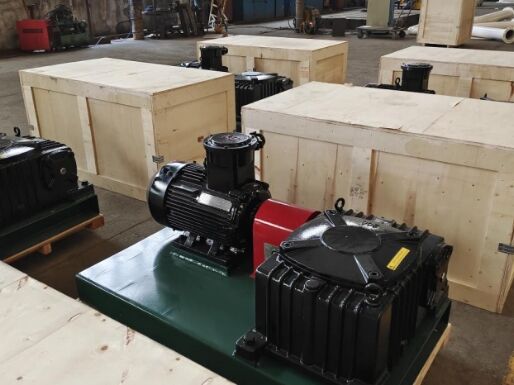
Ultra-deep well drilling faces three core challenges:
To address these challenges, Xi’an Black Rhino Industrial has achieved breakthroughs in materials, structure, and control technologies.
At the materials level, core equipment components are made of high-temperature and corrosion-resistant alloys, with sealing elements constructed from high-temperature-resistant materials such as fluoroelastomers, enabling stable operation at temperatures up to 200°C.
At the structural level, the flow channels of desanders and centrifuges have been optimized to improve separation efficiency under high-pressure conditions, with a maximum working pressure of 140 MPa.
At the control level, the intelligent monitoring system has been upgraded to track equipment temperature, pressure, and other parameters in real time, automatically adjusting operational status to prevent failures caused by high temperature and high pressure.
In an overseas ultra-deep well project, Xi’an Black Rhino Industrial’s solids control equipment successfully operated under 165°C high temperature and 120 MPa formation pressure, keeping drilling fluid solids content within safe limits, ensuring continuous and stable drilling operations, and providing valuable practical experience for ultra-deep well solids control technology.
 EN
EN