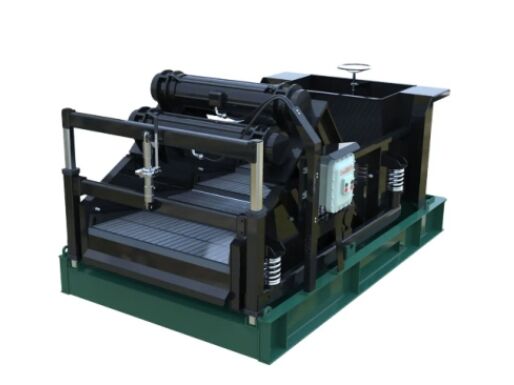
A shale shaker is the primary and most critical piece of equipment in a drilling fluid solids control system. In complex drilling operations, the shale shaker serves as the first stage of solids removal, directly influencing the performance of downst...
Read More
As a core auxiliary device in a drilling rig’s mud system, the shale shaker’s compatibility directly determines the efficiency of drill cuttings separation, the stability of mud performance, and the overall drilling operation efficiency. ...
Read More
The core objective of river dredging has evolved from simple “sediment removal and channel expansion” to a dual focus on “ecological restoration and functional enhancement.” Eco-friendly river dredging operations aim not only ...
Read More
The shale shaker is the core equipment for solid-liquid separation in shale drilling and extraction operations, directly affecting cuttings screening efficiency, mud purification quality, and the smoothness of subsequent operations. Due to complex wo...
Read More
Monitoring the effectiveness of river sediment treatment—including dredging, sediment remediation, and sludge resource utilization—is a core step for evaluating management outcomes, ensuring ecological safety, and optimizing subsequent me...
Read More
In drilling operations, the stable operation of the mud system directly determines borehole quality, drilling efficiency, and operational safety. As a key auxiliary device in mud handling, mud agitators use high-frequency vibration to provide essenti...
Read More
River dredging is by no means a short-term task of simply “clearing the channel”; it is a systematic governance measure that balances ecological restoration, public welfare, economic development, and flood safety. Its benefits are not onl...
Read More
Rivers are a vital component of ecosystems, serving not only water supply, irrigation, and navigation functions, but also maintaining regional ecological balance. Riverbed sediments act as a “storage reservoir” for pollutants, and their l...
Read More
In the full lifecycle of mining operations, tailings management is often regarded by some companies as a “peripheral, end-stage process.” In reality, it has long become a critical link that determines a company’s survival and develo...
Read More
In the wave of green transformation in the mining industry, tailings management has long moved beyond the old model of “extensive storage” and entered a new stage of refined governance characterized by “volume reduction, resource ut...
Read More
Behind the rise of urban skyscrapers and the connectivity of transportation hubs, the handling of slurry in construction has always been a critical factor affecting the success of projects. Many people are unfamiliar with “slurry separation,&r...
Read More
Tailings management accounts for a significant portion of operating costs in mining enterprises. Selecting a tailings treatment process that is both environmentally compliant and cost-effective has become a key factor in enhancing a company’s c...
Read More Hot News
2026-04-03
2026-04-03
2026-04-01
2026-03-31
2026-03-30
2026-03-30
 EN
EN