 EN
EN

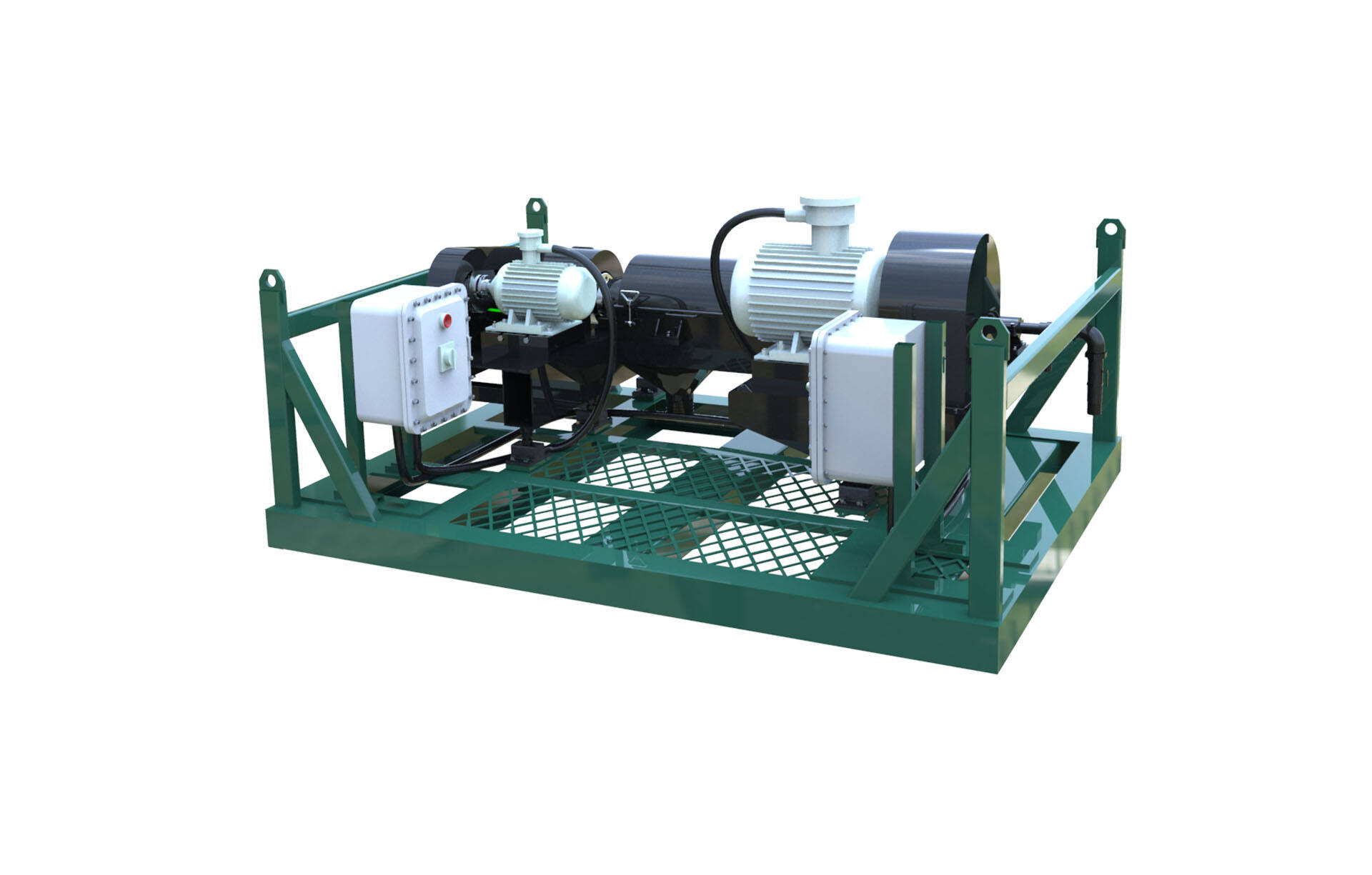
A decanter centrifuge operates on the fundamental principle of centrifugal force to achieve solid-liquid separation through high-speed rotation. This industrial equipment creates a powerful gravitational field thousands of times stronger than Earth's gravity, forcing denser solid particles to move outward while lighter liquid phases remain closer to the center. The separation mechanism relies on the difference in specific gravity between the solid and liquid phases, making the decanter centrifuge one of the most effective continuous separation technologies available in modern industrial processing.
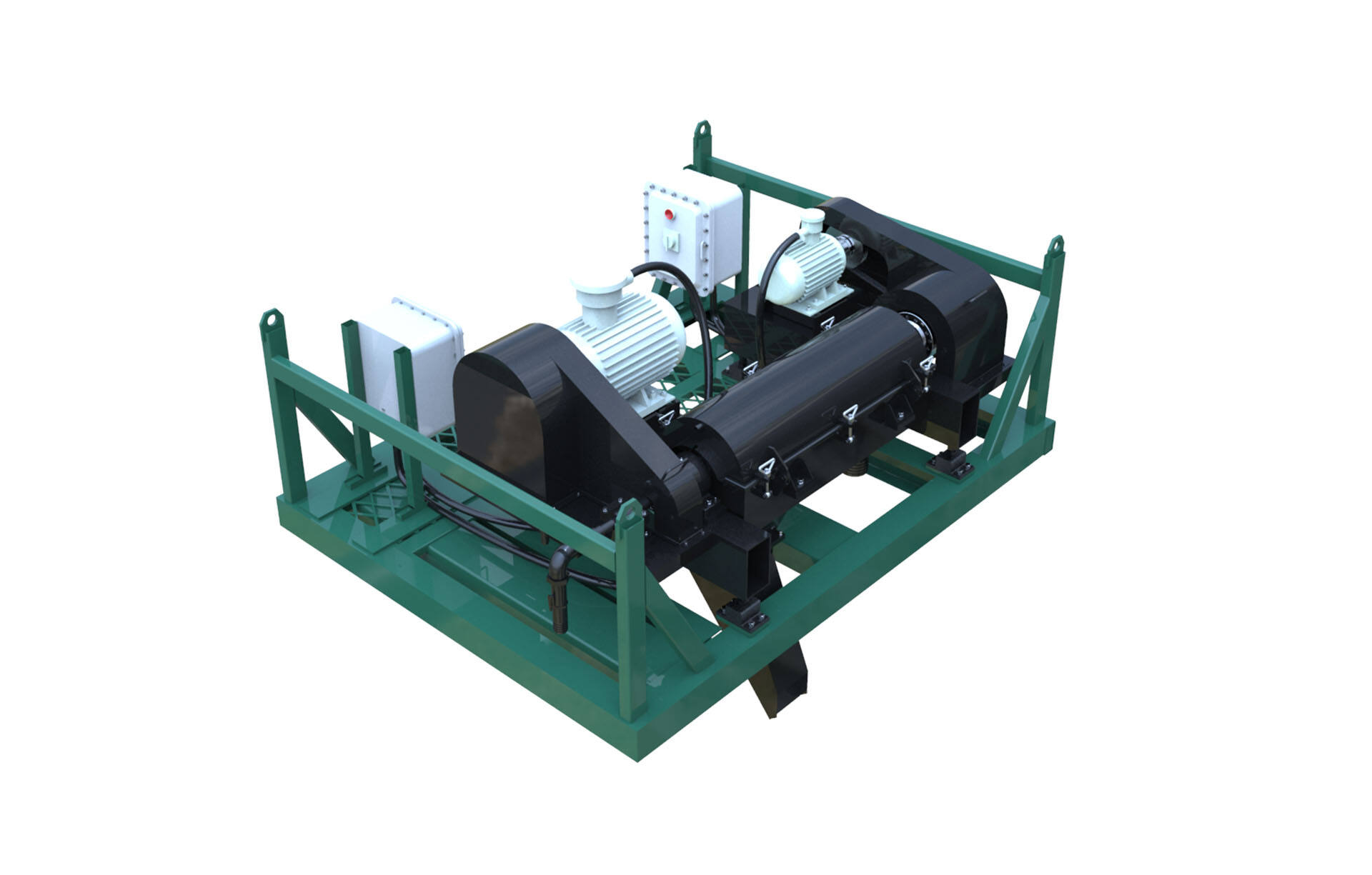
Understanding how a decanter centrifuge separates solids from liquids requires examining the intricate mechanical design and physics that enable continuous, automated separation processes. The equipment consists of a horizontal rotating bowl containing a helical screw conveyor that rotates at a slightly different speed than the bowl itself. This differential rotation creates the conveying action necessary to transport separated solids while maintaining optimal liquid clarification throughout the process.
Core Operating Principles of Decanter Centrifuge Separation
Centrifugal Force Generation and Application
The separation process begins when the feed mixture enters the decanter centrifuge through a central feed pipe and is immediately subjected to intense centrifugal forces. The rotating bowl generates gravitational forces typically ranging from 1,000 to 4,000 times Earth's gravity, depending on the bowl diameter and rotation speed. These powerful forces cause solid particles to migrate radially outward toward the bowl wall, while the clarified liquid forms distinct layers based on density differences.
The effectiveness of solid-liquid separation in a decanter centrifuge depends critically on the relationship between particle size, density difference, and residence time within the centrifugal field. Larger particles and greater density differences between phases result in faster separation rates, while smaller particles require longer residence times to achieve complete separation. The centrifugal acceleration formula demonstrates that doubling the rotational speed quadruples the separating force, making speed control a crucial parameter in optimizing separation performance.
Differential Speed Mechanism
The helical screw conveyor within the decanter centrifuge rotates at a speed slightly different from the bowl, creating what engineers call the differential speed. This differential speed typically ranges from 1 to 50 rpm depending on the application requirements and material characteristics. The screw conveyor continuously transports the separated solid phase toward the discharge ports while maintaining the liquid pool depth necessary for effective clarification.
Precise control of the differential speed allows operators to balance solid dryness against liquid clarity, as higher differential speeds increase solid transport rate but may reduce separation efficiency. The decanter centrifuge achieves optimal separation by maintaining consistent differential speed throughout the operating cycle, ensuring continuous solid discharge while preventing solid re-entrainment in the liquid phase.
Physical Design Elements Enabling Separation
Bowl Configuration and Geometry
The bowl of a decanter centrifuge features a cylindrical section connected to a conical section, with each zone serving specific separation functions. The cylindrical section provides the primary clarification zone where solid particles settle under centrifugal force, while the conical section facilitates solid transport and dewatering as the screw conveyor moves material toward the discharge ports. The length-to-diameter ratio of the bowl directly influences residence time and separation efficiency.
Modern decanter centrifuge designs incorporate variable bowl geometries to optimize separation for specific applications. The cone angle, typically ranging from 6 to 20 degrees, affects the solid transport characteristics and discharge moisture content. Steeper cone angles promote faster solid transport but may reduce dewatering efficiency, while gentler angles enhance solid dryness at the expense of transport rate.
Screw Conveyor Design and Function
The helical screw conveyor represents the heart of the decanter centrifuge separation mechanism, featuring carefully engineered pitch variations and flight configurations. The screw pitch typically decreases toward the discharge end to provide increased conveying torque and enhanced solid compression. Some advanced decanter centrifuge designs incorporate multiple pitch zones to optimize both transport efficiency and solid dryness.
The clearance between the screw flights and bowl wall, known as the gap, critically affects separation performance by influencing solid transport and preventing excessive liquid carryover. Typical gap dimensions range from 2 to 8 millimeters depending on the application and solid characteristics. Proper gap maintenance ensures consistent separation quality while minimizing wear and maintenance requirements.
Separation Process Flow and Stages
Feed Introduction and Initial Distribution
The separation process initiates when the feed mixture enters the decanter centrifuge through a stationary feed pipe positioned along the machine's centerline. The feed distributor, often featuring multiple ports or a special accelerator design, ensures uniform distribution of the mixture into the rotating pool. Proper feed distribution prevents localized overloading and maintains consistent separation conditions throughout the bowl circumference.
Feed flow rate control plays a crucial role in separation efficiency, as excessive feed rates can overwhelm the settling capacity while insufficient rates may result in suboptimal equipment utilization. The decanter centrifuge achieves optimal performance when the feed rate matches the settling capacity, allowing sufficient residence time for complete phase separation while maintaining continuous operation.
Clarification Zone Operation
Within the clarification zone of the decanter centrifuge, solid particles experience continuous radial acceleration that forces them toward the bowl wall where they form a compact solid layer. The liquid phase, being less dense, remains in the inner regions of the rotating pool and gradually moves toward the liquid discharge ports. The depth of the liquid pool, controlled by adjustable weirs or overflow ports, determines the settling area available for separation.
Turbulence minimization in the clarification zone is essential for achieving high separation efficiency. Modern decanter centrifuge designs incorporate flow-directing elements and optimized feed introduction systems to reduce turbulence and prevent re-mixing of separated phases. The laminar flow conditions within the clarification zone enable even fine particles to settle effectively under the influence of centrifugal force.
Process Variables Affecting Separation Performance
Operational Parameter Control
The effectiveness of solid-liquid separation in a decanter centrifuge depends on several controllable operational parameters that operators must carefully balance. Bowl speed directly affects the centrifugal force and separation driving force, with higher speeds generally improving separation efficiency but also increasing energy consumption and mechanical stress. Feed rate influences residence time and loading conditions, requiring optimization based on the specific material characteristics and separation requirements.
Temperature control significantly impacts separation performance by affecting fluid viscosity and particle settling rates. Higher temperatures typically reduce liquid viscosity, improving separation efficiency, but may also affect material stability or require additional process considerations. The decanter centrifuge can accommodate a wide range of operating temperatures through appropriate material selection and auxiliary heating or cooling systems.
Material Characteristics and Adaptation
The physical and chemical properties of the feed material directly influence how effectively a decanter centrifuge can achieve solid-liquid separation. Particle size distribution affects settling rates, with larger particles separating more readily than fine particles that may require enhanced settling conditions or chemical conditioning. Density difference between the solid and liquid phases determines the driving force for separation, with greater differences enabling more efficient separation.
Solid concentration in the feed affects both separation efficiency and solid handling characteristics within the decanter centrifuge. Higher solid concentrations may require slower processing rates or enhanced conveying capacity to prevent overloading, while very low concentrations might not justify the use of centrifugal separation. Understanding these material characteristics enables operators to optimize equipment settings for maximum separation performance.
Advanced Separation Enhancement Techniques
Chemical Conditioning and Pretreatment
Chemical conditioning can significantly enhance the separation performance of a decanter centrifuge by modifying particle characteristics or liquid properties. Flocculants and coagulants increase effective particle size by promoting agglomeration, enabling better settling of fine particles that might otherwise pass through with the liquid phase. Polymer addition can also modify the rheological properties of the mixture to improve separation efficiency.
pH adjustment represents another important pretreatment technique that can optimize separation conditions in a decanter centrifuge. Many industrial processes benefit from pH modification to enhance particle settling characteristics or prevent chemical interactions that might interfere with separation. The timing and dosing of chemical additions require careful control to achieve maximum benefit without creating operational complications.
Process Integration and Optimization
Modern decanter centrifuge installations often incorporate advanced process control systems that monitor and adjust operational parameters in real-time based on separation performance indicators. These systems can automatically optimize bowl speed, differential speed, and feed rate to maintain consistent separation quality despite variations in feed composition or operating conditions. Integration with upstream and downstream processes ensures optimal overall system performance.
Multi-stage separation configurations using multiple decanter centrifuge units can achieve enhanced separation performance for challenging applications. Sequential processing allows for progressively finer separation or the handling of complex multi-component mixtures that cannot be effectively processed in a single separation stage. Each stage can be optimized for specific separation objectives, maximizing overall process efficiency.
FAQ
What is the minimum particle size that a decanter centrifuge can effectively separate?
A decanter centrifuge can typically separate particles as small as 2-5 microns, depending on the density difference between the solid and liquid phases, bowl speed, and residence time. For particles smaller than 2 microns, chemical conditioning with flocculants or coagulants is often necessary to increase effective particle size and improve separation efficiency.
How does the separation efficiency compare between a decanter centrifuge and other solid-liquid separation methods?
Decanter centrifuge separation typically achieves higher efficiency than gravity settling, filtration, or hydrocyclones for most applications due to the intense centrifugal forces generated. The continuous operation capability and automated solid discharge make decanter centrifuges particularly suitable for high-volume processing where consistent separation quality is required without manual intervention.
What factors determine the clarity of the liquid discharged from a decanter centrifuge?
Liquid clarity from a decanter centrifuge depends on feed characteristics, bowl speed, liquid pool depth, residence time, and proper equipment operation. Higher bowl speeds and longer residence times generally improve liquid clarity, while excessive feed rates or improper differential speed settings can reduce clarification efficiency. Regular maintenance and proper gap adjustment also ensure optimal liquid clarity.
Can a decanter centrifuge separate multiple liquid phases simultaneously?
Yes, specialized three-phase decanter centrifuge designs can separate two immiscible liquid phases plus solids simultaneously. These units feature separate discharge systems for each liquid phase based on density differences, though the separation efficiency for liquid-liquid separation is generally lower than for solid-liquid separation due to smaller density differences between liquid phases.
Table of Contents
- Core Operating Principles of Decanter Centrifuge Separation
- Physical Design Elements Enabling Separation
- Separation Process Flow and Stages
- Process Variables Affecting Separation Performance
- Advanced Separation Enhancement Techniques
-
FAQ
- What is the minimum particle size that a decanter centrifuge can effectively separate?
- How does the separation efficiency compare between a decanter centrifuge and other solid-liquid separation methods?
- What factors determine the clarity of the liquid discharged from a decanter centrifuge?
- Can a decanter centrifuge separate multiple liquid phases simultaneously?