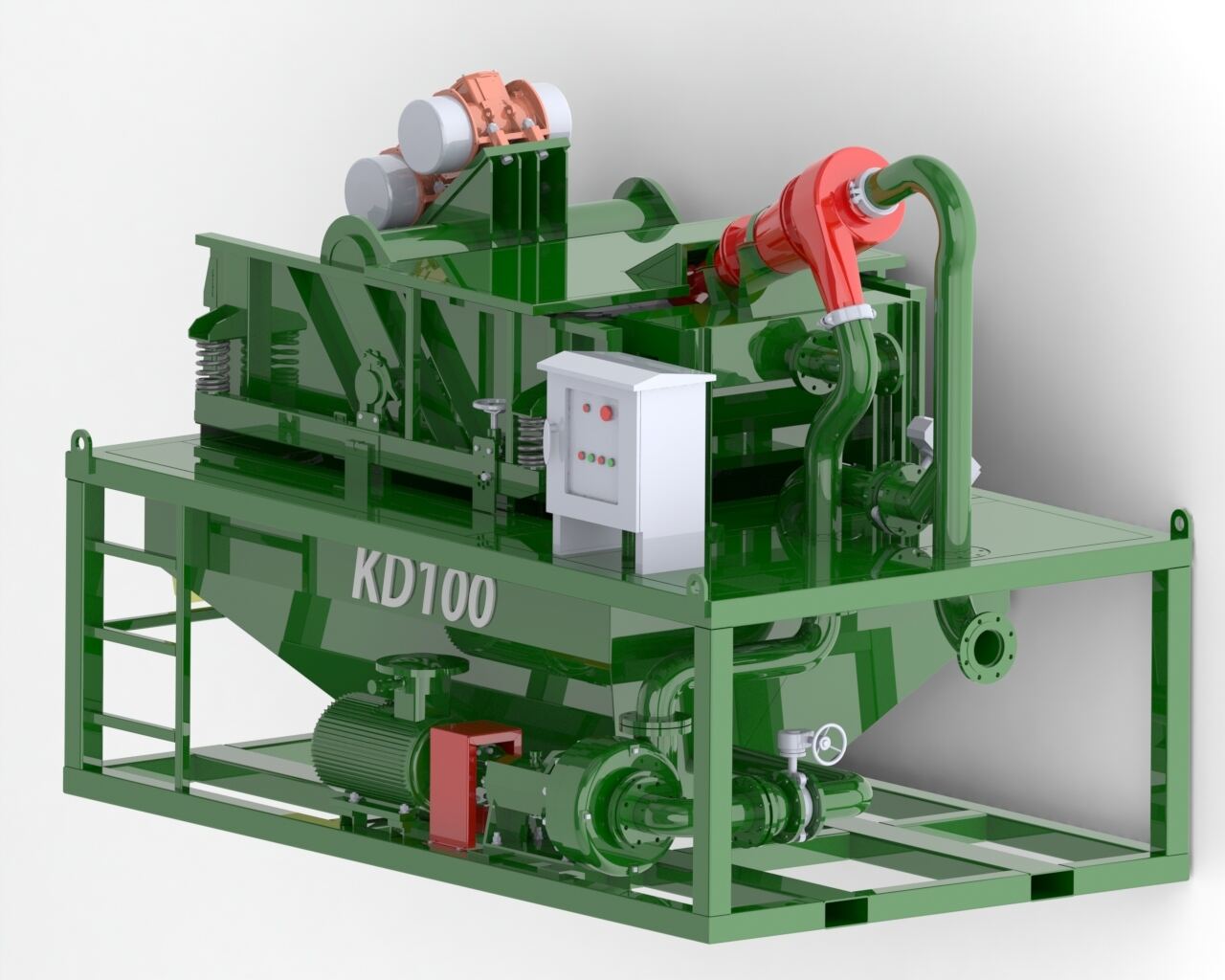
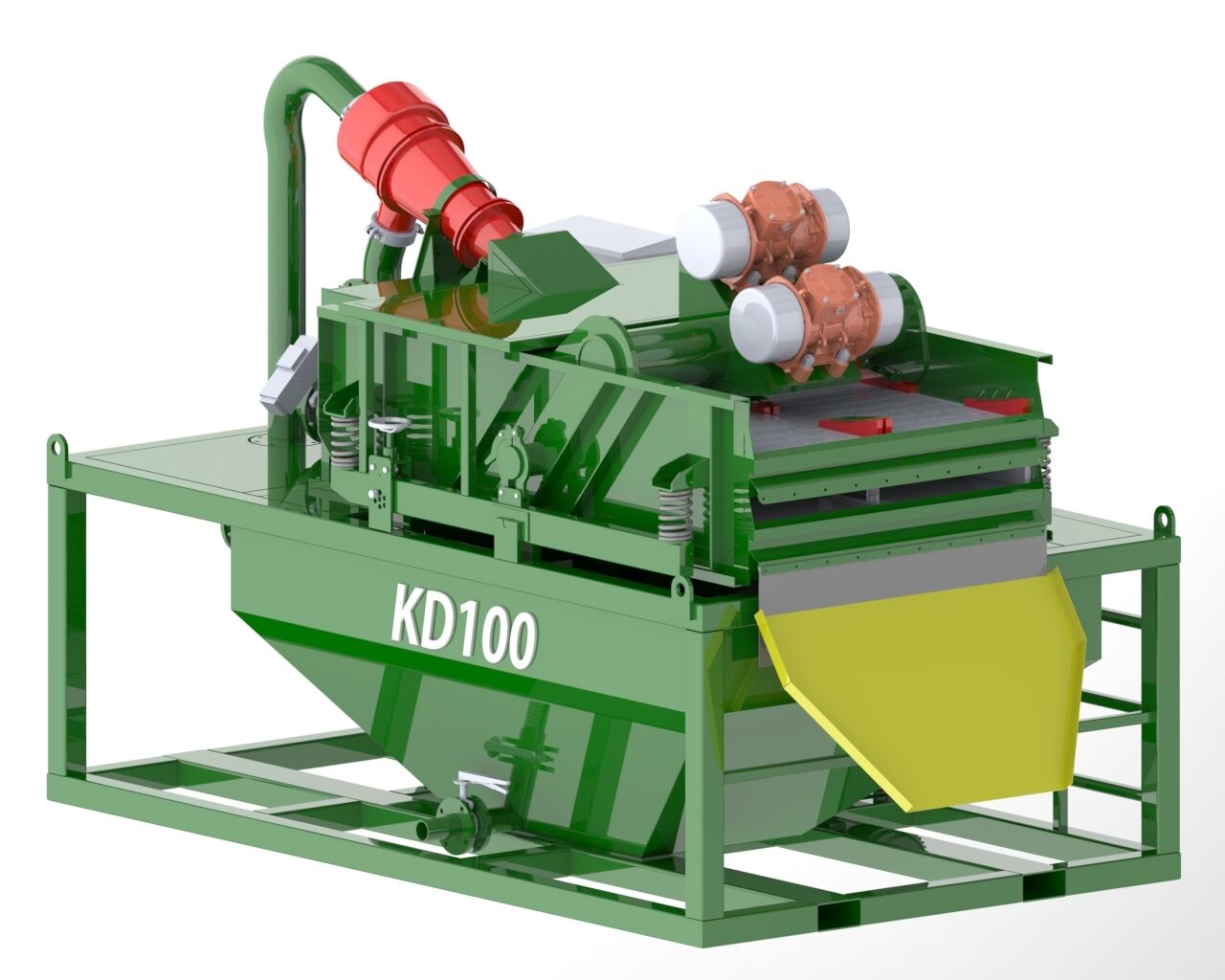
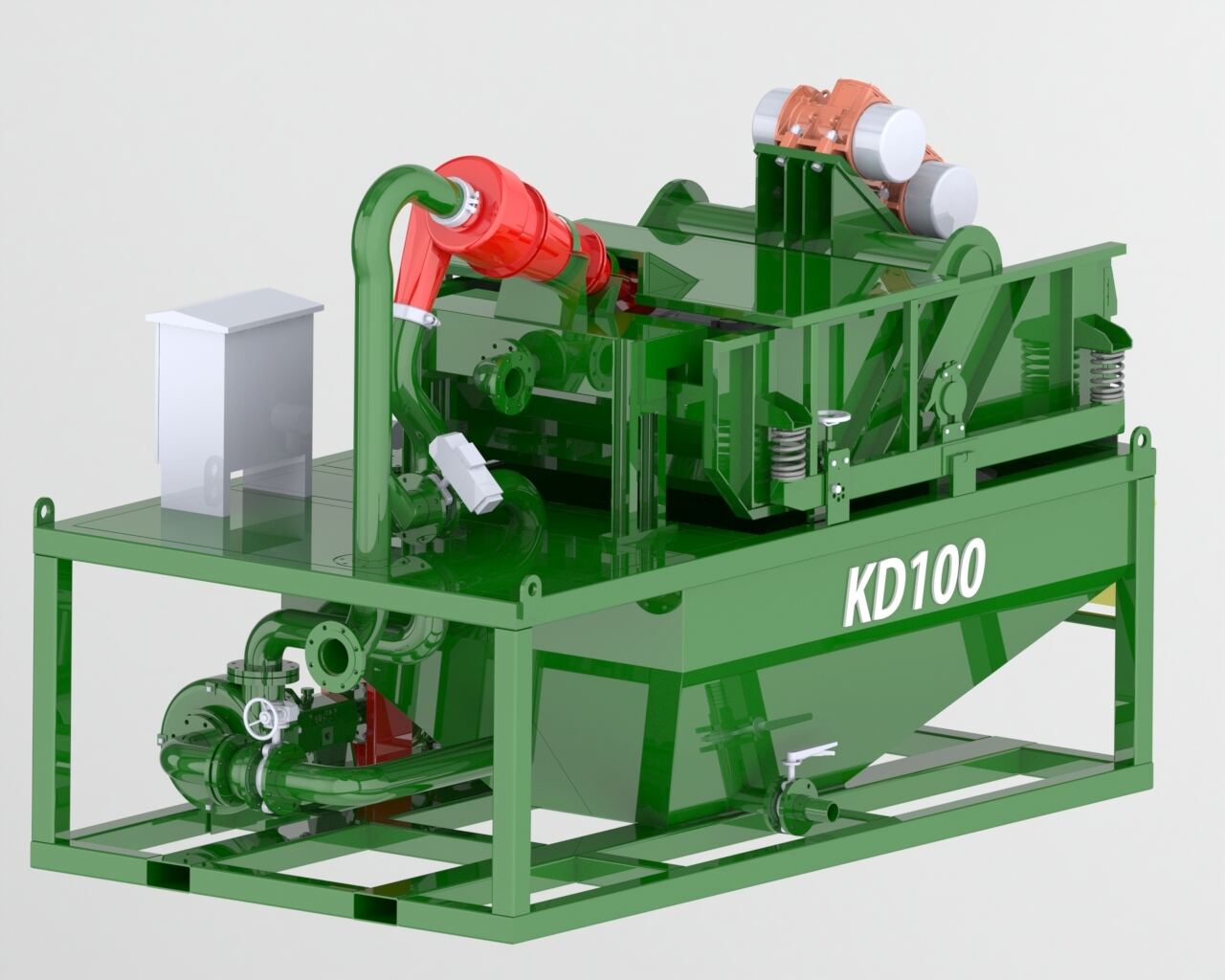

The Black Rhino KD-100 Shield Slurry Treatment System is an efficient slurry purification equipment specifically developed for medium-to-small slurry balance shield projects and lightweight underground engineering. With “efficient purification, flexible deployment, and economical reliability” as its core design philosophy, the equipment is primarily integrated from four key components: vibrating screen, desanding cyclone, gravel pump, and conical tank. Each component is precisely matched and collaboratively optimized to form a complete and efficient slurry purification closed loop. This system addresses the slurry treatment needs of medium-to-small scale projects, balancing purification effectiveness with lightweight design and practicality, providing stable slurry treatment support for efficient project advancement.
I. Equipment Positioning & Core Composition
The Black Rhino KD-100 Shield Slurry Treatment System is an efficient slurry purification equipment specifically developed for medium-to-small slurry balance shield projects and lightweight underground engineering. With “efficient purification, flexible deployment, and economical reliability” as its core design philosophy, the equipment is primarily integrated from four key components: vibrating screen, desanding cyclone, gravel pump, and conical tank. Each component is precisely matched and collaboratively optimized to form a complete and efficient slurry purification closed loop. This system addresses the slurry treatment needs of medium-to-small scale projects, balancing purification effectiveness with lightweight design and practicality, providing stable slurry treatment support for efficient project advancement.
II. Core Performance & Purification Capability
Precise Separation to Ensure Slurry Quality: Equipped with a vibrating screen featuring a double-layer screen structure, the coarse screen can quickly intercept large particle slag in the slurry. Combined with the collaborative action of the desanding cyclone and fine-mesh screen, it can accurately remove fine sand as small as 45 μm. The key indicators such as sand content and viscosity of the purified slurry strictly meet shield construction requirements, effectively avoiding problems like tunneling equipment wear and decreased construction efficiency caused by excessive impurities in the slurry, ensuring smooth construction progress.
Processing Capacity Adapted to Medium-to-Small Projects: The equipment’s rated processing capacity reaches 100 m³/h, perfectly matching the slurry treatment needs of medium-to-small shield projects (such as small-diameter municipal tunnels, short-distance underground utility tunnels, etc.). It avoids both slurry backlog and construction stagnation caused by insufficient capacity, and resource waste caused by excess capacity, achieving precise alignment between processing efficiency and project scale.
Green & Environmentally Friendly to Reduce Construction Pollution: Adopts slurry closed-loop circulation purification mode to minimize slurry discharge and reduce pollution to surrounding water bodies and soil. Simultaneously, through optimized separation processes, it significantly reduces the moisture content of separated slag, which not only facilitates centralized transportation and subsequent disposal (such as resource utilization or compliant landfilling), but also reduces waste discharge during construction, aligning with the development trend of modern green construction.
III. Equipment Advantages & Practical Features
Lightweight Design for Flexible and Convenient Deployment: The total machine weight is only 2.8 t, with dimensions of 3.5 m × 1.6 m × 2.5 m. Its compact size and light weight result in extremely low space requirements for the construction site. Whether in narrow construction sites within urban areas or temporary operation zones in underground engineering, it can be easily installed and deployed, significantly reducing site planning difficulty and equipment transportation costs. Additionally, the equipment supports modular quick assembly, shortening the pre-construction commissioning period and helping projects start quickly.
Low Energy Consumption for Controllable Operating Costs: The total installed power is only 25.44 kW. While ensuring 100 m³/h processing capacity, it effectively reduces equipment operation energy consumption, significantly saving electricity costs over long-term use. Moreover, the core accessories are made of corrosion-resistant and wear-resistant materials, featuring excellent anti-loss performance, low failure rates, and long service life, reducing maintenance frequency and replacement costs, further lowering overall project operating costs.
Simple Operation & Maintenance to Lower Usage Barrier: The treatment process is optimized and simplified with clear logic and simple steps. Ordinary construction personnel can become proficient after short-term professional training, without relying on highly skilled technical personnel, reducing labor costs. During daily maintenance, there is no need to disassemble complex components. Only routine inspection, cleaning, and replacement of wear parts (such as screens) are required to ensure stable equipment operation, saving maintenance time and labor input.
Strong Working Condition Adaptability for Diverse Environments: Although a medium-to-small scale equipment, its core components feature excellent corrosion and wear resistance, easily coping with harsh working conditions common in shield construction such as dampness, high dust, and slurry corrosion. It also supports flexible adjustment of vibrating screen excitation force, screen box inclination angle, and screen aperture size according to construction geological conditions (such as sand layers, clay layers, strata with low gravel content, etc.) and slurry characteristics, ensuring stable slurry purification effects under different working conditions with extremely strong adaptability.
IV. Applicable Scenarios
With its advantages of lightweight, high efficiency, and easy deployment, the KD-100 is widely adapted to the following medium-to-small scale project scenarios:
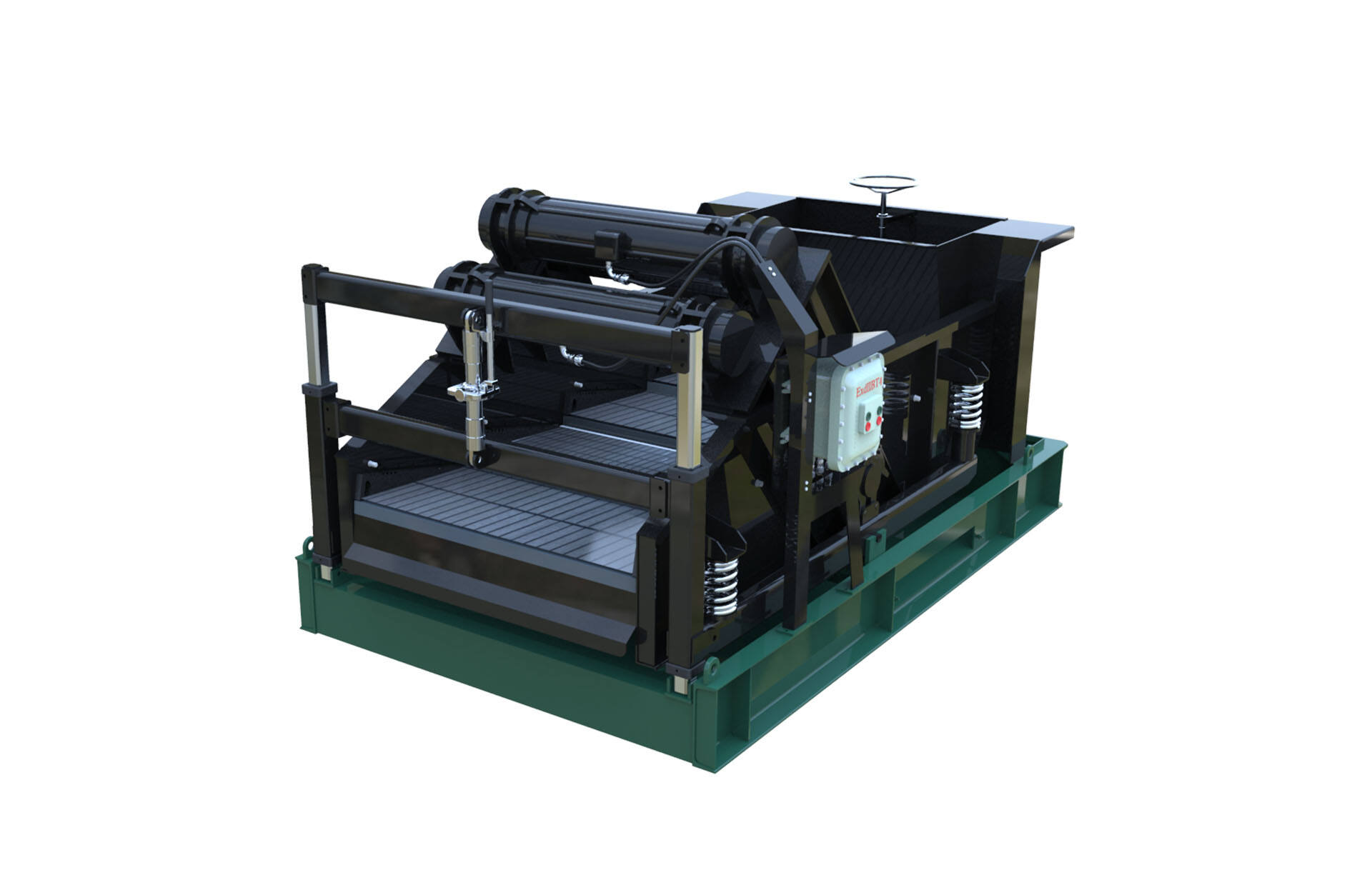
BLACK RHINO SHALE SHAKER
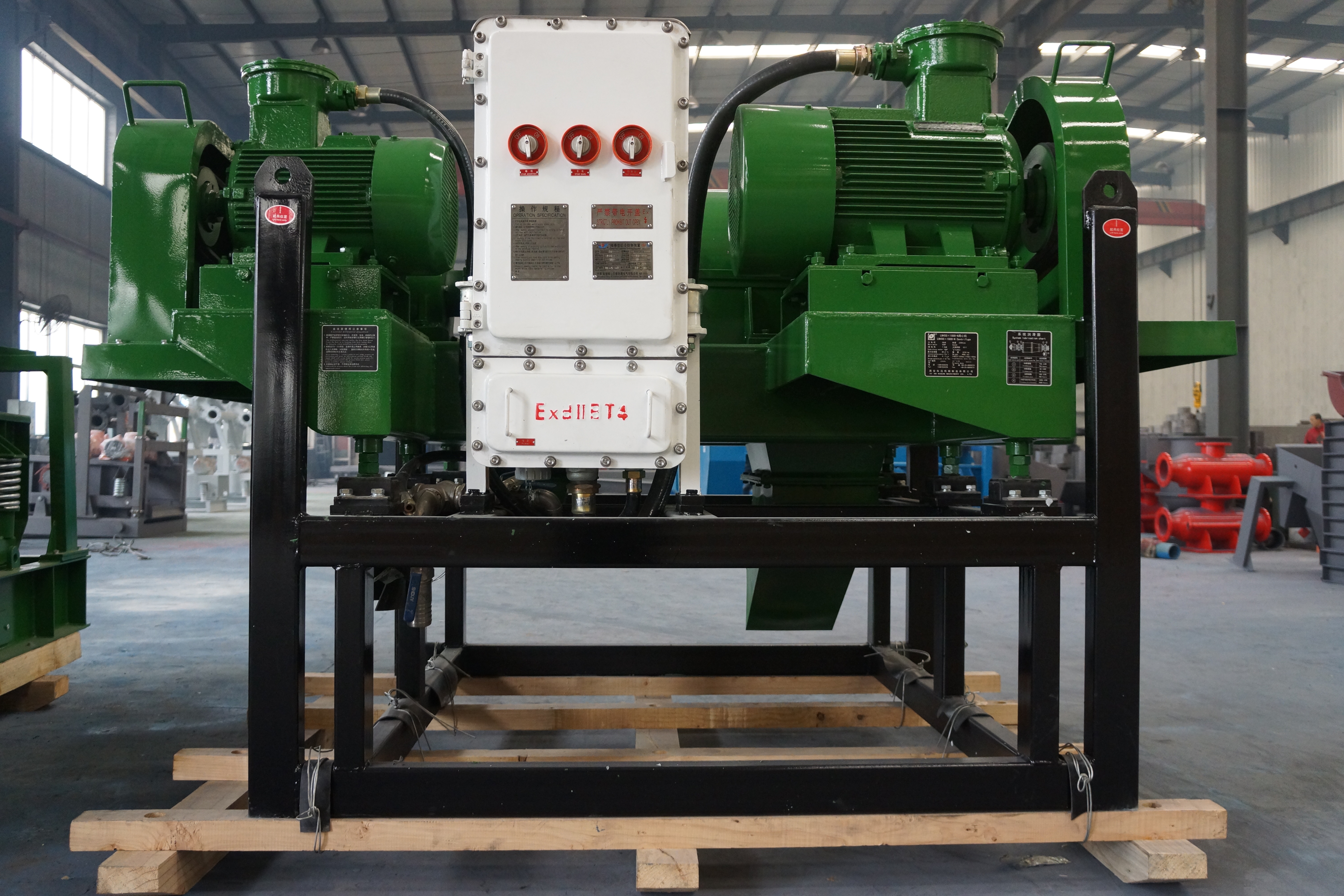
LW 450×1000 Decanter Centrifuge
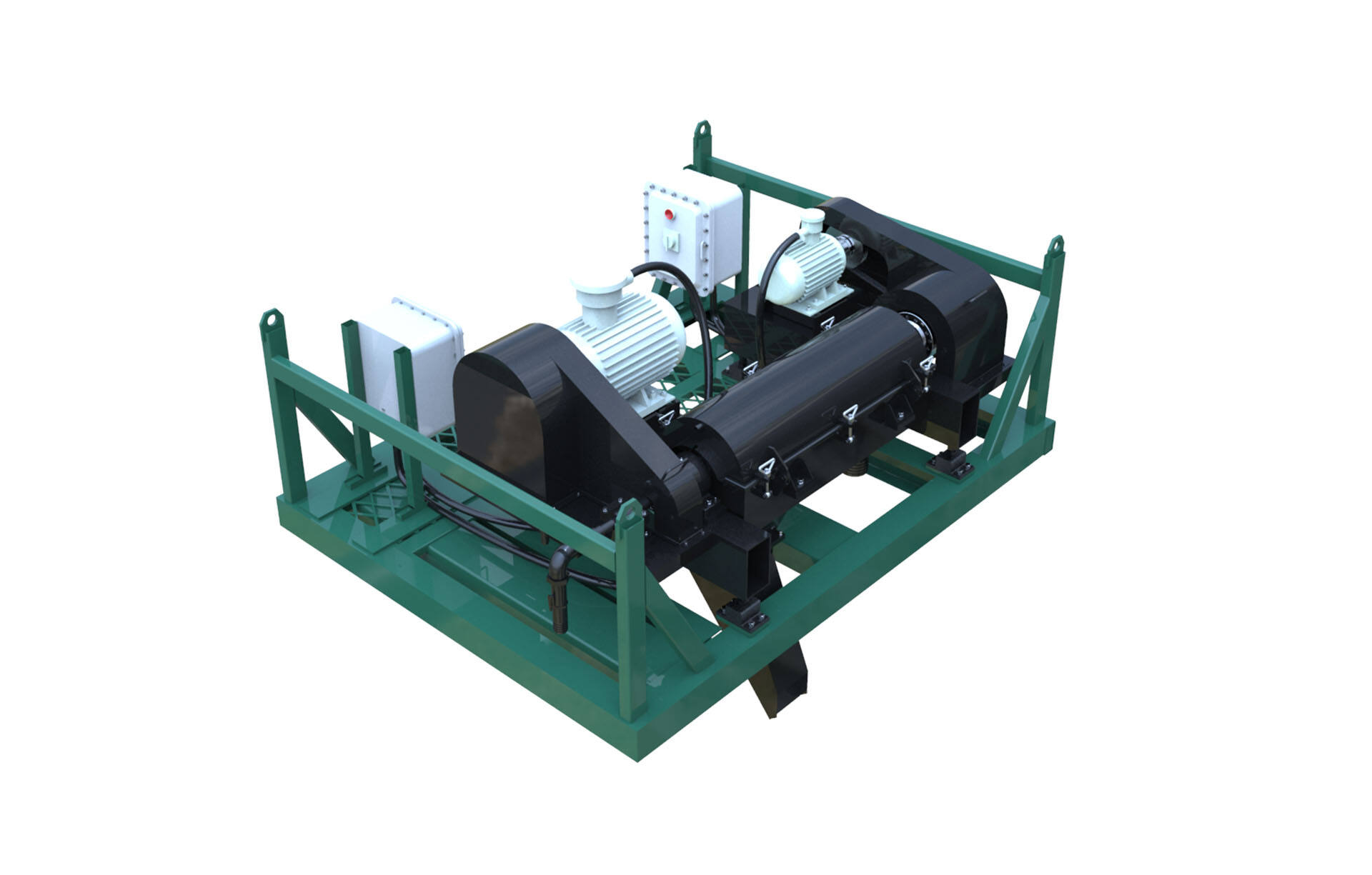
DC355 Decanter Centrifuge
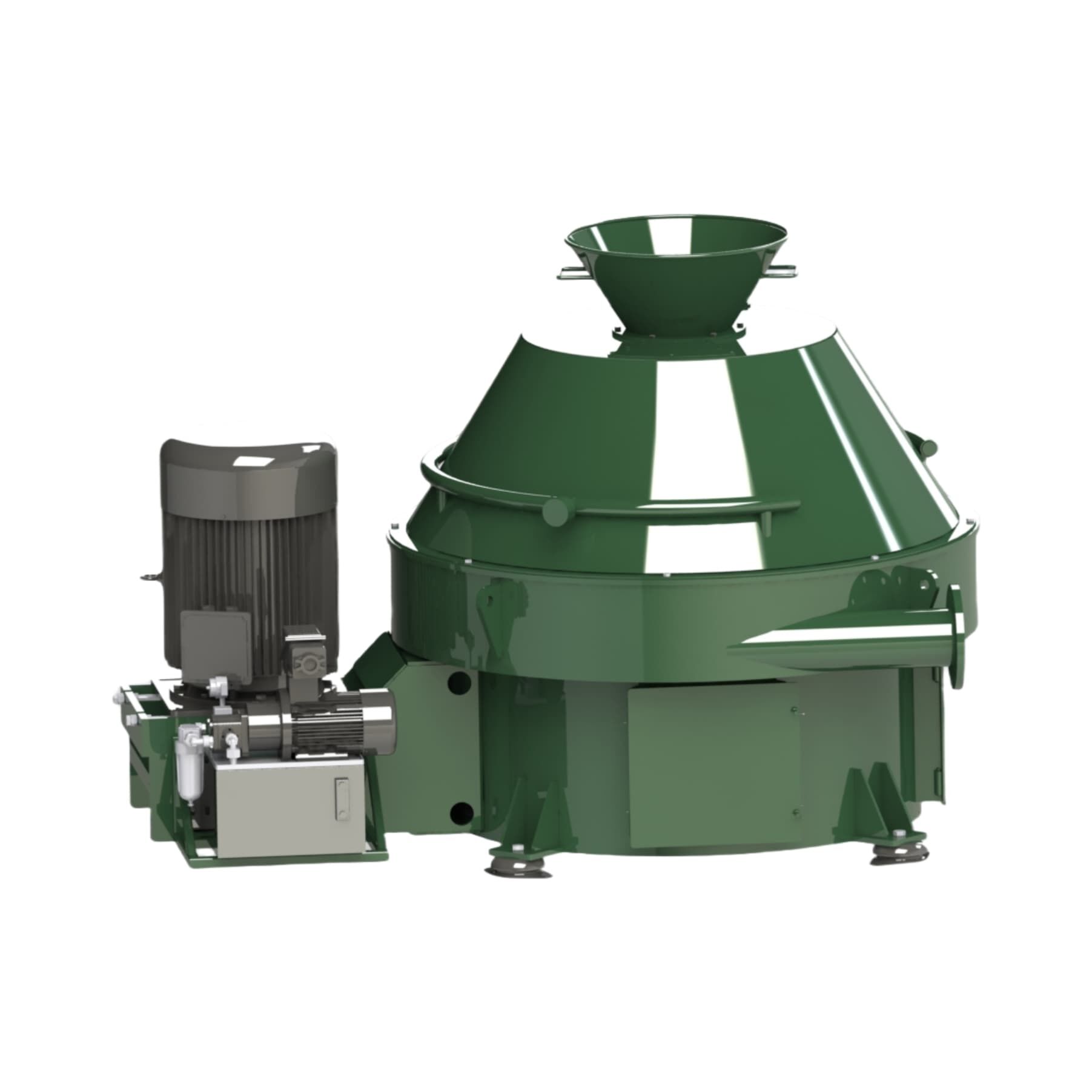
VC700 Vertical Cuttings Dryer
 EN
EN